How Safe Is It To Swim With Dolphins?
A plain safety guide to swimming with dolphins around Adelaide: the rules, the licensed swim tours, approach distances, kids, health cautions and the safest ways to watch instead.
Around Adelaide, swimming with wild dolphins is safe in the sense that matters most: it is legal, it is regulated under marine mammal laws, and the two swim tours sold here use controlled line swims or guided snorkels rather than loose free swimming. The real risks are not the dolphins themselves. They are cold water, seasickness, and mismatched expectations, and each is manageable with the right trip choice.
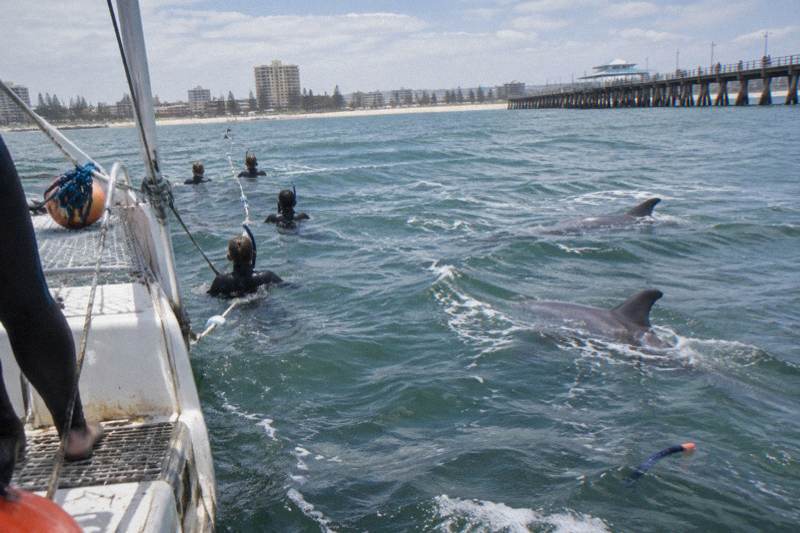
That is the short version. The longer version matters, because "swim with dolphins" means very different things depending on where you are standing. In Glenelg, it means holding a flotation line behind a catamaran while wild Indo-Pacific bottlenose and short-beaked common dolphins, the species the operator says its tours watch, choose whether to come near. On Kangaroo Island, it means a guided snorkel where the swim may turn out to be with dolphins, or with seals, or a coastal snorkel, because wildlife interactions are expressly not guaranteed. In the Port River and the Adelaide Dolphin Sanctuary, it means nothing at all: every trip there is a watching or paddling trip, and that is by design rather than by accident.
The safety question also has a legal layer that most visitors never hear about. South Australia rewrote its marine mammal regulations in 2025, and those rules now shape how close a boat can sit, how long swimmers can stay near an animal, and who is even allowed to sell a paid dolphin swim. Understanding that layer answers most of the worries people arrive with: are the dolphins harassed, is the swim supervised, and what happens if a calf shows up. The regulations give clear answers to all three.
Before the detail, here are the three trips a safety-conscious reader is most often choosing between: the swim cruise itself, a watching alternative, and a paddle option in the sanctuary.
If you are weighing a swim against a deck seat, the guide on whether to swim or watch from the boat walks through that trade-off in full. What follows here is the safety layer underneath it.
Is Swimming With Wild Dolphins Legal In South Australia?
Yes, with one condition: a paid swim must be run by a licensed operator. The National Parks and Wildlife (Protected Animals, Marine Mammals) Regulations 2025, in force since 1 September 2025, prohibit taking another person into the vicinity of a marine mammal for a fee to observe or swim near it without a Ministerial permit. So dolphin swims in South Australia are neither banned nor unrestricted; they are licensed. If you're wondering what else shifted under the new rules, the guide to what changed with dolphin swimming near Adelaide explains the approach distances and what you can still book.
The regulations themselves are public and readable, and they are the reason the swim product on this trip looks the way it does. The 2025 Regulations set the approach distances for both vessels and swimmers, and ban feeding and touching. A licensed commercial swim operates within that frame, and the crew manages the distances.
For a private swimmer, the numbers are different from the commercial ones. A person in the water may not move closer than 30 m to a dolphin, and no closer than 150 m if the animal is a calf, shows signs of disturbance, or appears sick or entangled. Vessels must stay at least 50 m from a dolphin, or 150 m if a calf is present or the dolphins show disturbance signs; jet skis and other prescribed vessels have a 300 m rule that does not apply to ordinary tour boats. Within 150 m, a boat may not anchor, may not exceed 4 knots, may not head straight at an animal, and may not stay longer than 60 minutes. None of this is fine print for a swimmer on a licensed tour: the crew carries it. But it explains why the dolphin decides the encounter, not you.
That is the heart of swim safety here, and it is worth saying plainly. The dolphins in Gulf St Vincent and around Kangaroo Island are wild animals that approach out of curiosity and leave when they choose. A controlled swim does not chase them. It puts swimmers in the water on a line, keeps the boat's distance rules, and lets the animals close the gap if they want to. Every safety mechanism on these trips is a version of that same idea: structure the encounter so the dolphin stays in control.
Two tours on this site sell a dolphin swim. One is the Temptation Sailing wild dolphin swim cruise from Glenelg, about 4 hours, from $106 per person, rated 4.7 from over 400 reviews, capped at 26 swimmers and passengers, with wetsuits, masks and snorkels included. The other is the Kangaroo Island Ocean Safari swim and snorkel safari from Penneshaw, about 2 hours, from $136.81 per person, rated 4.7 across 286 reviews, capped at 20, with wetsuit and snorkel gear listed and free cancellation up to 24 hours before the start. Every other trip here, the watch cruises, the Port River cruises and all three kayak tours, is a watching or paddling trip. Swimming with wild dolphins on a paid trip is only offered by licensed operators.
| Trip | Format | Duration | Price per person | Rating and reviews | Group max | Key safety detail |
|---|---|---|---|---|---|---|
| Temptation Sailing swim cruise, Glenelg | Swim, controlled line | About 4 hours | From $106 | 4.7, over 400 reviews | 26 | Wetsuit, mask and snorkel included; under 9s may watch only |
| Kangaroo Island swim and snorkel safari, Penneshaw | Swim, guided snorkel | About 2 hours | From $136.81 | 4.7, 286 reviews | 20 | Dolphins OR seals OR coastal snorkel; interactions not guaranteed |
| Temptation Sailing watch cruise, Glenelg | Watch from deck | About 4 hours | From $59 | 4.8, over 300 reviews | Check the booking page | Guaranteed dolphin sightings, money back if none are spotted |
| Dolphin Sanctuary eco kayaking tour, Garden Island | Paddle | 3 hours | From $54 | 4.6, over 600 reviews | Check the booking page | Guide described as a marine biologist; minimum age 10 |
Wondering whether a swim is right for you at all?
Are Controlled Line Swims Actually Safer Than Free Swimming?
Yes, by the operator's design. On the Temptation Sailing swim cruise, swimmers hold a flotation line behind the catamaran in what the operator calls a fully controlled swim, with front and back swim positions and customers rotated through them. Nobody swims off alone after a dolphin.
Free swimming beside a wild dolphin sounds romantic and is not how the Glenelg swim cruise works. The line format exists because it solves the three real dangers of an open-water swim with marine mammals. First, separation: a swimmer drifting after a moving pod is the classic risk, and a fixed line makes it impossible. Second, proximity: swimmers clustered on a line cannot individually close distance on an animal. Third, exhaustion: cold water and a wetsuit tire people quickly, and a line means the boat is always one arm's reach away.
The Glenelg swim is the flagship version of this. The operator provides a 5mm full-length wetsuit, swimmers hold the flotation line, and under 9s may not swim but may watch from the boat. The trip also carries a health caution that belongs to this cruise alone: pacemaker wearers may do the front swim only. It boards at Holdfast Shores Marina, 10 Holdfast Promenade, Glenelg. Its own page says you are guaranteed to see dolphins. It has run swim and watch tours from Glenelg since 2002, and says it was the first vessel in South Australia given a licence to swim with dolphins.
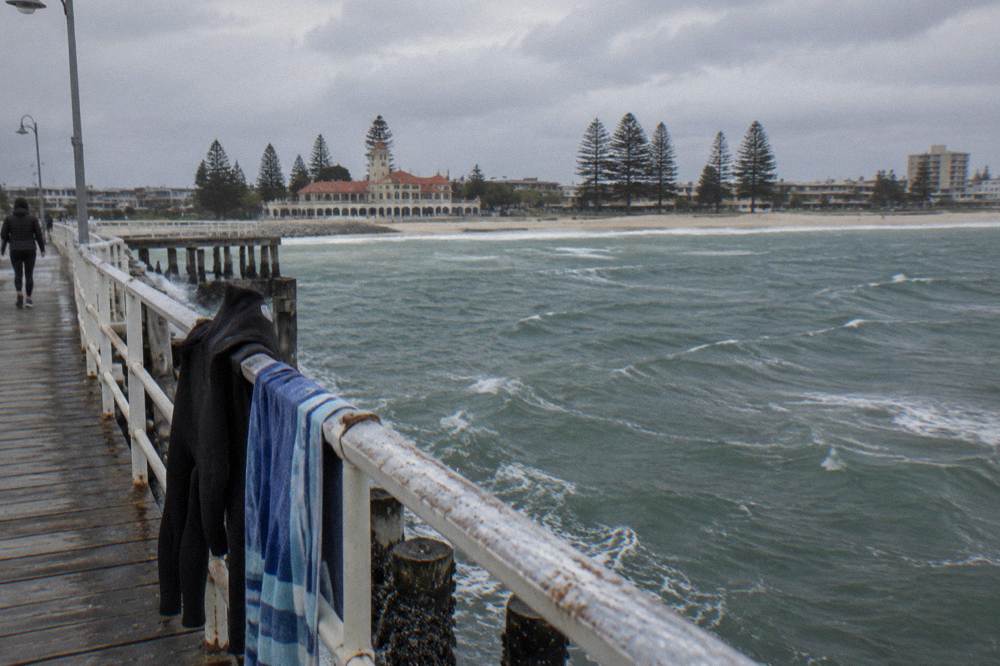
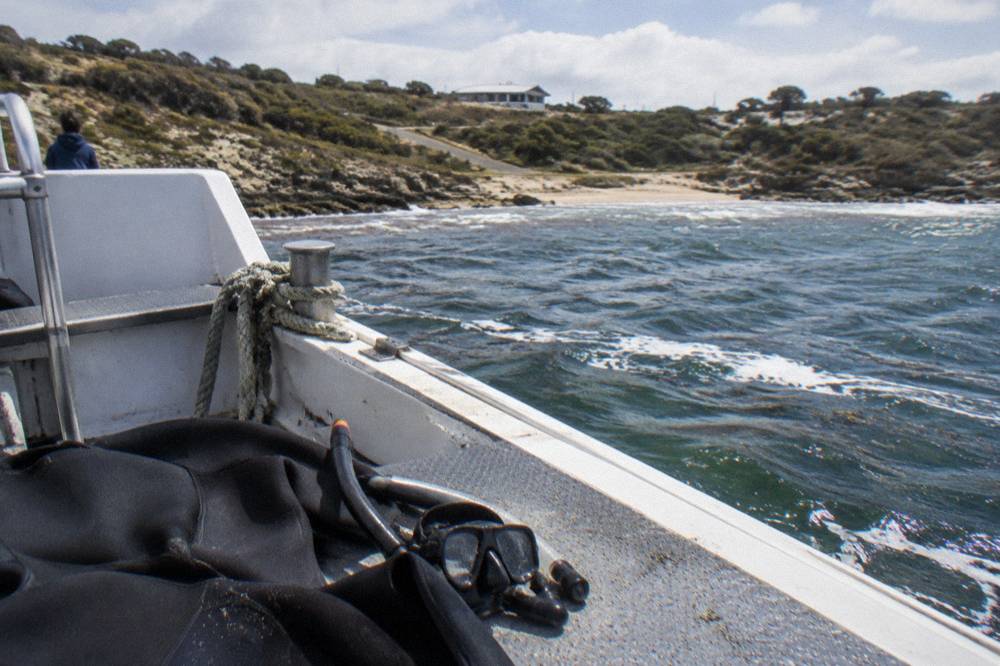
The Kangaroo Island version is structured differently and honestly described. The swim is dolphins OR seals OR a coastal snorkel, wildlife interactions are not guaranteed, and the operator recommends the swim for over 9s, which is a recommendation rather than a minimum age. A swimmer line with buoys is often used for the dolphin swim, wetsuits, gloves, mask, snorkel and fins are provided, and the trip is described as not suitable for people with a pacemaker or during pregnancy. Swimmers meet at the Kangaroo Island Information Spot, 43 Howard Drive, Penneshaw, where the change rooms are. Each caution belongs to its own tour: the pacemaker rule on the Glenelg front swim is Temptation's, the pregnancy caution is Kangaroo Island Ocean Safari's, and neither should be read onto the other trip.
Can You Swim With Dolphins In The Port River Or The Adelaide Dolphin Sanctuary?
No, and no trip there sells one. The Adelaide Dolphin Sanctuary, 118 square kilometres of water, mangroves, saltmarsh and tidal creeks proclaimed in 2005, is home to around 20 resident Indo-Pacific bottlenose dolphins, with some 400 more observed using the area over time. Every commercial trip inside it here is a cruise or a kayak tour: watching and paddling only, never a swim.
That is not a gap in the market, it is the character of the place. The sanctuary is shallow, tidal and threaded with mangrove creeks, and its dolphins include mothers with calves, which pulls in the stricter 150 m approach distance for vessels whenever a calf is present. Kayaks work beautifully in that environment. Swimmers chasing dolphins through it would not. The Port River cruise from McLaren Parade says it plainly in its own words: dolphins are wild animals and sightings cannot be guaranteed. The eco kayaking operator says the animals are free to come and go as they please.
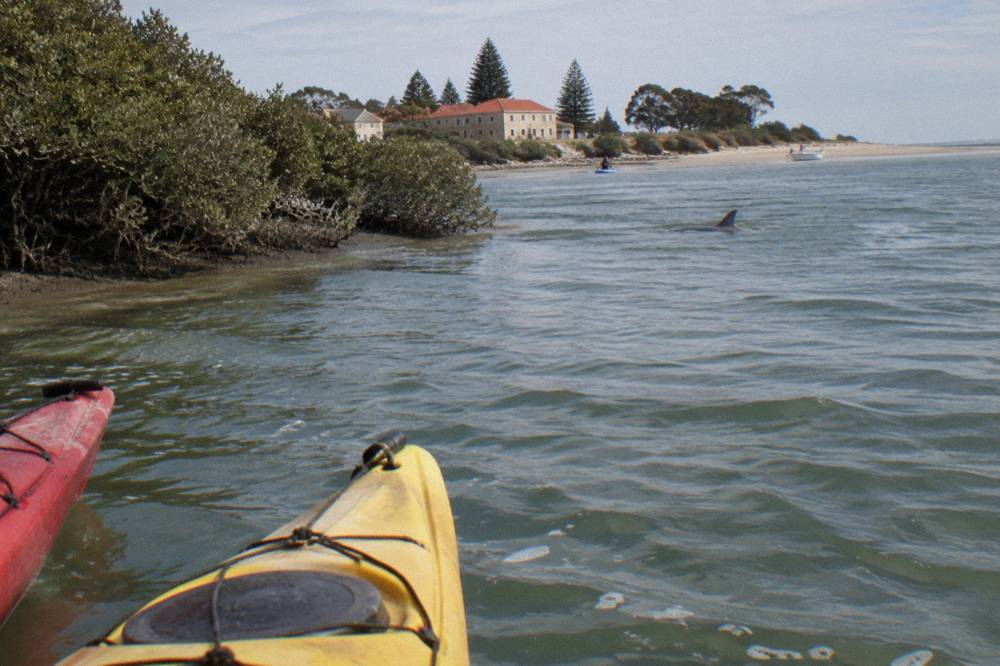
For a nervous swimmer, this is worth reframing as good news rather than a disappointment. If the question behind "how safe is it" is really "am I going to be out of my depth, literally", then the sanctuary offers the gentlest entry point in the state. The Dolphin Sanctuary Kayak Tours eco kayaking tour, 3 hours from $54 per person, rated 4.6 from over 600 reviews, is guided by a lead guide described as a marine biologist with over 10 years experience, minimum age 10, free cancellation up to 24 hours before. The Adventure Kayaking SA dolphin sanctuary and ships graveyard kayak tour runs about 3 hours from $54.72, rated 4.8 across 300 reviews, minimum age 8, capped at 12 paddlers, also with free cancellation up to 24 hours before. The eco tour meets at the Angas Inlet Boat Club; the Adventure Kayaking SA tour meets at Lot 204 Garden Island Road, Gillman, a public reserve where the operator has no office, so arrive ready to change.
You stay in the boat, on the deck or in the kayak, and the dolphins come to the water surface around you. The SA Department for Environment and Water notes dolphins are normally seen in the Garden Island area a couple of times a day from the boardwalk, which is a staff observation rather than a promise, but it tells you how resident these animals are. Calm water, no swim, no wetsuit, and children as young as 8 on the right tour: for many families that is the safest dolphin experience in South Australia, full stop.
The sanctuary's watching-only character is covered in more depth in the guide to Adelaide Dolphin Sanctuary tours and tickets, including how the three kayak options differ.
Is The Water Itself Safe? Weather, Cold And The Algal Bloom
The physical risks on an Adelaide dolphin swim are the ordinary open-water ones: cold, chop and seasickness, in that order. A 5mm wetsuit handles the cold on the Glenelg swim, the catamaran platform handles the chop better than any small boat, and the honest answer on the algal bloom is that SA testing shows zero or low Karenia along the metropolitan coast; check the operator's notice before a swim.
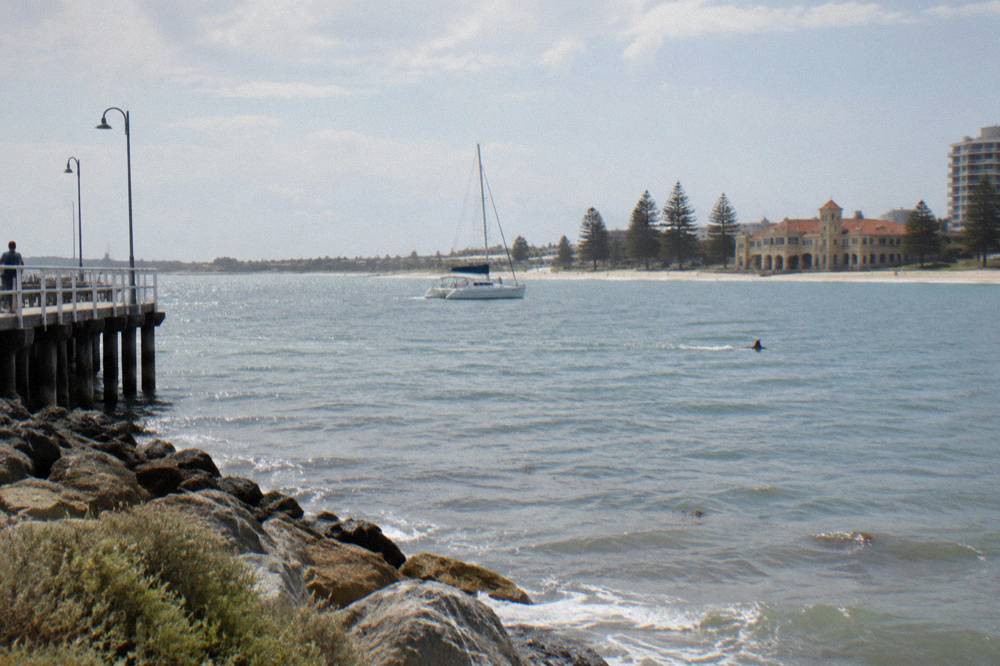
Water temperature is the underrated risk. Adelaide's mean sea-adjacent air temperatures peak in January and February and drop sharply by June, when mean daily maximums sit near 15 to 16 °C. A 4-hour trip in a wetsuit in that range is a different proposition from a summer one. If you feel the cold, eat beforehand, and treat seasickness tablets as a pre-departure decision rather than a mid-trip one, because they work better taken early. None of the trips here state a seasickness policy, so ask the operator when booking if you are prone.
On the bloom itself, one sentence is all a safety page needs, and it is the safe one above. What the state's monitoring does say publicly is that government agencies continue to monitor while remaining vigilant to the possibility of future blooms, so treat any single week's status as a snapshot you check, not a permanent all-clear. The official bloom status page is the primary source, and the general health advice is to avoid foamy or abnormally coloured water for any boating or paddling and rinse after contact.
Weather cancellation is a separate question from safety in the water, and it is tour-specific. Free cancellation up to 24 hours before the start applies to the Kangaroo Island swim safari, both Victor Harbor cruises, both Port River cruises and all three kayak tours. The Kangaroo Island 75-minute coastal safari is the one non-refundable trip here, though weather cancellation by the operator gives an alternative date or a refund. Neither Temptation cruise states cancellation terms on the page priced here, so confirm them at booking rather than assuming. The full picture, including what rough-weather days look like on each departure, is in the guide to cruise weather and cancellations.
Are Dolphin Swims Safe For Kids And Nervous Swimmers?
For kids, the answer is age-tiered and tour-specific: 8 is the minimum on both Adventure Kayaking SA kayak tours, 10 on the Dolphin Sanctuary eco kayak tour, 2 on both Big Duck cruises, and the Kangaroo Island swim safari recommends over 9 without setting a minimum. On the Glenelg swim cruise, under 9s may not swim but may watch. There is no stated minimum age on the swim pages themselves, so the operator's recommendation is the working guide.
Nervous adult swimmers should read the line-swim format as their friend. You are never swimming alone: you hold a rope, you wear a wetsuit that floats you, and crew are metres away with everyone rotated through front and back positions in small groups. If the thought of deep water is the barrier, note that the encounter happens on the dolphins' terms near the surface, not on the seabed. If the thought of the animals is the barrier, the honest framing is that wild dolphins routinely approach boats and swimmers out of curiosity, the animals are never chased, touched or fed.
The genuinely safe fallback, and it is not a consolation prize, is the watching deck. The Temptation Sailing wild dolphin watch cruise from Glenelg, about 4 hours from $59 per person, rated 4.8 from over 300 reviews, carries its own guarantee wording: guaranteed dolphin sightings, with money back if no dolphins are spotted, a promise that belongs to that cruise alone. The Kangaroo Island 75-minute coastal safari, about 1 hour 15 minutes from $61.74, rated 4.8 across 639 reviews, is the most reviewed trip covered here, capped at 38 passengers, though sightings are stated not to be guaranteed and the trip is otherwise non-refundable. And the Big Duck Seal Island cruise from Victor Harbor, 45 minutes from $38, is the cheapest trip here outright: a seal-first cruise where dolphins are only possible, minimum age 2, free cancellation up to 24 hours before.
For a family split between swimmers and watchers, the Glenelg pairing is the clean solution: one party on the swim cruise, the rest on the watch cruise from the same marina precinct, both run by Temptation Sailing. The family angle, including which departure suits which age group, is laid out in the guide to an Adelaide dolphin cruise with kids.
So, how safe is it really? On the licensed tours covered here, the structured answer is: safe enough that the state licenses it and controlled enough that you hold a line rather than your nerve. The animals are protected by law, the swimmers are protected by format, and the watchers are protected by both. Choose the trip that matches your water confidence, read the health cautions that belong to your specific tour, and check the operator's bloom notice before any swim. Between the swim cruise, the watching decks and the sanctuary kayaks, the trio below spans the full safety range.
Common Questions About Swimming With Dolphins Safely
How Safe Is It To Swim With Dolphins?
On the swim tours around Adelaide and Kangaroo Island, a dolphin swim is a controlled, supervised experience: swimmers hold a flotation line or join a guided snorkel, wear a provided wetsuit, and stay within the 2025 Regulations' approach distances managed by the crew. The dolphins are wild and never chased or touched. The main personal risks are cold water and seasickness, both manageable.
Can You Swim With Dolphins Anywhere In South Australia?
Swimming with wild dolphins on a paid trip is only offered by licensed operators. Two trips here sell a swim: the Temptation Sailing swim cruise from Glenelg and the Kangaroo Island Ocean Safari swim and snorkel safari. The Port River cruises, the kayak tours and the Victor Harbor cruises are watching or paddling trips only.
Do The Dolphins Come Close To Swimmers?
They can, but every encounter is on the animals' terms. Swimmers hold a line and do not pursue the pod; the dolphins approach out of curiosity if they choose. The Kangaroo Island safari states plainly that wildlife interactions are not guaranteed, and the swim may be with seals or a coastal snorkel instead.
Is There A Minimum Age For A Dolphin Swim?
Each tour sets its own. On the Glenelg swim cruise, under 9s may not swim but may watch from the boat. The Kangaroo Island swim safari recommends the swim for over 9s without stating a minimum. If you need a stated minimum, the kayak tours carry them: 8 on both Adventure Kayaking SA tours and 10 on the eco kayaking tour.
What Health Conditions Affect A Dolphin Swim?
Check the cautions for your specific tour. The Glenelg operator says pacemaker wearers may do the front swim position only. The Kangaroo Island operator describes its snorkel safari as not suitable with a pacemaker or during pregnancy. Neither caution applies to the other trip, so read the page for the tour you are actually booking.
Is Watching From The Boat Safer Than Swimming?
Watching removes the in-water risks entirely, and the guarantee wording on the Temptation watch cruise, money back if no dolphins are spotted, means you give up little certainty by staying dry. For cold-sensitive swimmers, young children or anyone uneasy in deep water, a watch cruise or a sanctuary kayak tour is the safer choice and still a genuine dolphin experience.